
Brazil Tightens Cross-Border Payment Regulations with Ban on Virtual Assets
Brazil’s central bank, Banco Central do Brasil (BCB), has introduced new regulations for cross-border payment services, prohibiting the use of virtual assets in certain transactions. The move aims to reinforce the country’s financial and foreign exchange regulatory framework, particularly with regards to stablecoins, which have seen significant growth in recent years.
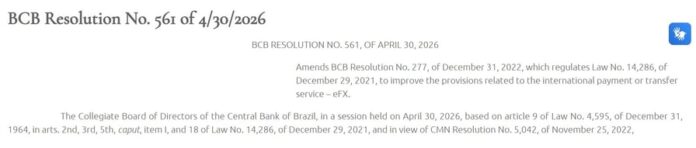
On Thursday, the BCB released Resolution BCB No. 561, amending existing rules for eFX, a regulated category for international payments and remittances. According to the resolution, payments or receipts between an eFX provider and its foreign counterparty may only be settled through a foreign exchange transaction or movement in a non-Brazil based real account, with the use of virtual assets prohibited. This restriction applies to all eFX providers, including those not yet listed in the approved provider categories, which must apply for approval from the Central Bank by May 31, 2027.
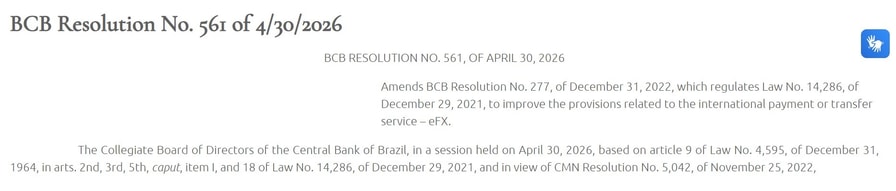
English translated excerpt from BCB Resolution No. 561. Source: BCB
Brazil’s Regulatory Environment for Cryptocurrencies
The new regulations are part of Brazil’s efforts to tighten oversight of crypto-related cross-border flows. In November 2025, the central bank detailed new rules for virtual asset providers, including licensing requirements and rules for virtual asset services in the foreign exchange market. The move follows concerns about the use of stablecoins for payments and cross-border transfers, with BCB Governor Gabriel Galipolo citing a significant increase in cryptocurrency usage in the country over the past two to three years.
Stablecoins and Regulatory Concerns
Stablecoins, in particular, have raised concerns about taxation, money laundering, and asset preservation. The central bank has expressed concerns about stablecoins issued by entities outside its regulatory scope, which could face a ban or strict requirements in the domestic market. According to a technical note sent to Congress, real-currency-denominated stablecoins issued outside BCB supervision could pose risks to regulatory equality and monetary sovereignty, while foreign-currency-denominated stablecoins raise concerns about jurisdiction, capital flows, and payment system fragmentation.
For more information on Brazil’s regulatory environment for cryptocurrencies, visit the source link: https://cointelegraph.com/news/brazil-central-bank-bars-virtual-assets-from-cross-border-payment-service-efx?utm_source=rss_feed&utm_medium=rss_tag_regulation&utm_campaign=rss_partner_inbound

