
Reevaluating Web3 Scaling: The Need for P2P Clearing Over Bigger Blockchains
The pursuit of faster, larger, and more powerful blockchains has become a common narrative in the Web3 scaling debate. However, this approach may be misguided, as it reflects a flawed mentality reminiscent of the 1980s’ focus on increasing single-core processor speed. Every new generation of blockchains promises millions of transactions per second and negligible fees, but this may not be the key to achieving mass adoption.
A closer examination of the history of computer science reveals that the emphasis on throughput is a technological dead end. The development of supercomputers and minicomputers in the 1960s and 1970s, respectively, led to significant advancements in processing power. However, the focus on increasing clock speed eventually reached a physical limit, and the solution lay in the adoption of multi-core processing and specialization.
The 1984 Processor Problem and Its Relevance to Web3
The 1984 processor problem, which arose from the attempt to increase single-core processor speed, is eerily similar to the current approach to Web3 scaling. The pursuit of faster and more powerful blockchains is based on the assumption that a single, monolithic engine can handle all types of transactions, from high-value transfers to retail micropayments. However, this approach is fundamentally inconsistent with real-world usage, as blockchain was designed for final settlement, not high-frequency clearing.
Imagine a trip to the grocery store, where you aggregate items, receive an invoice, and pay the total at the end. Current blockchains, on the other hand, attempt to account for each item individually, leading to inefficiencies and structural deficiencies that need to be addressed before mass adoption can be achieved.
Structural Obstacles to Web3 Adoption
The gas fee barrier is a significant challenge in scaling Web3, as even low-cost chains require users to pay a fee for each interaction, creating psychological and economic barriers to adoption. In reality, Web3 requires zero-gas processing for the vast majority of daily interactions. Additionally, liquidity fragmentation across hundreds of chains creates isolated pools of liquidity, leading to over $2 billion in bridge exploits in 2025.
Developers are forced to spend their time managing multiple chains instead of focusing on the application layer, leading to complex and cumbersome user experiences. The need for a unified financial market that Web3 can create is hindered by the current state of liquidity fragmentation and cross-chain complexity.
The Solution: P2P Clearing and Specialization
A real solution to the 1984 processor problem is to specialize and move the majority of transaction activity off the main chain. This can be achieved through the construction of a Layer 3 network specialized in high-frequency peer-to-peer clearing and settlement. This L3 can use simple and updated capital-efficient TrustFi technology to enable real-time, non-custodial, off-chain, cross-chain trading.
With TrustFi, millions of transactions are processed between banks every day, and only the net balances are cleared through the central bank. In Web3, L1 is the central bank for final settlement, and L3 becomes the trusted, decentralized clearing house. The vast majority of user interactions could thus become gasless, removing the primary psychological barrier to entry.
The L3 can also act as a “network of networks,” unifying fragmented liquidity pools without relying on risky bridges. Finally, developers can build complex, cross-chain applications that hide the underlying complexity of multiple blockchains.
As Alexis Sirkia, Chairman of Yellow Network, notes, “The history of computer science teaches us that scaling faster is achieved through architectural innovation, not brute force. We must stop trying to build a single, faster processor and instead build the specialized, parallelized infrastructure that the global economy requires.”
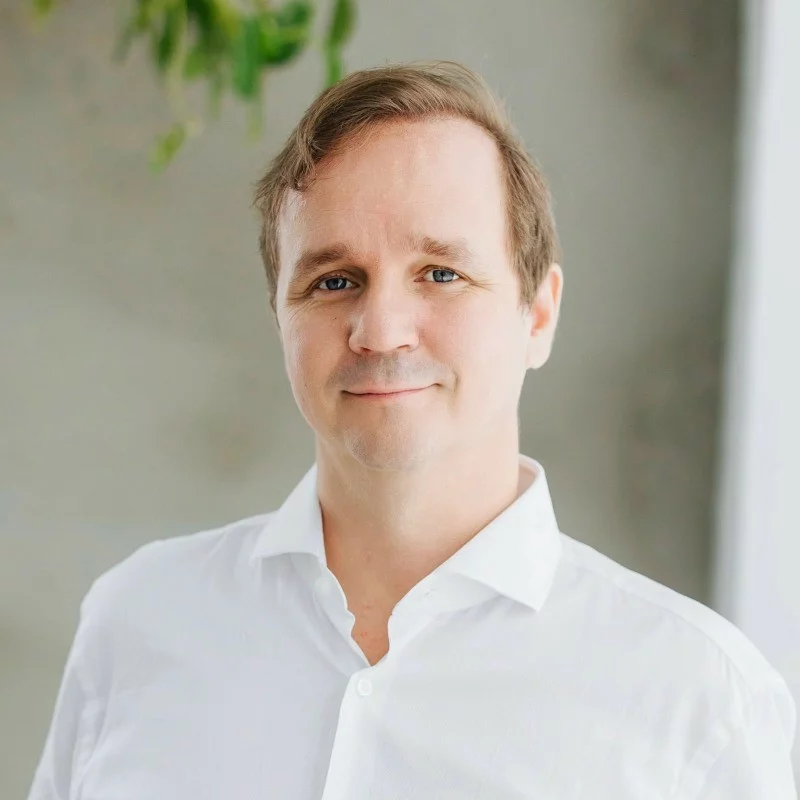
Alexis Sirkia is Chairman of Yellow Network, where he oversees the strategic direction of the entire ecosystem. A recognized blockchain pioneer, he previously co-founded GSR, a leading cryptocurrency market maker, which played an integral role in Ripple’s early growth. Alexis holds a degree in Mathematics and Computer Science from Université Paul Sabatier Toulouse III.
For more information on Web3 scaling and the need for P2P clearing, visit https://crypto.news/web3-scaling-demand-p2p-clearing-not-bigger-blockchain/

