
Quantum Computing and Blockchain Security: Preparing for the Future
Quantum computers have the potential to revolutionize various industries, but they also pose a significant threat to the security of blockchain networks. While quantum computers are not yet capable of breaking Bitcoin or other major blockchains, several networks are taking proactive steps to prepare for a future where they might. In recent weeks, Aptos proposed post-quantum signature support, and Solana tested quantum-resistant transactions, highlighting the growing concern about quantum risk in the crypto community.
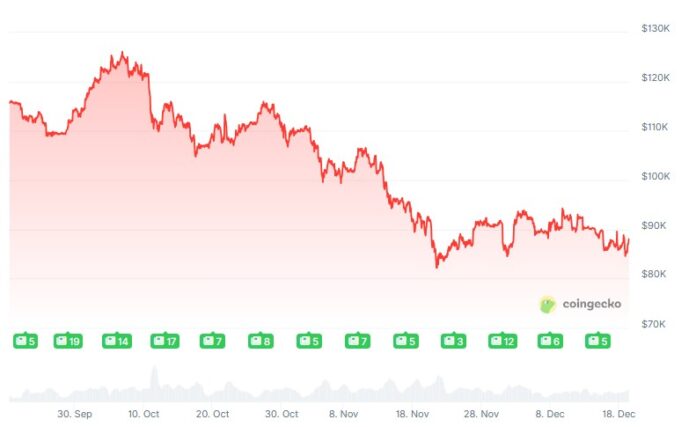
Investors are also taking notice, with some arguing that the dismissal of quantum risk by influential voices is affecting Bitcoin’s price, which has dropped 24% over the past three months. The Bitcoin community is divided over how to address quantum risks, with some developers and cryptographers downplaying the urgency of the threat, while others, like Ethereum co-founder Vitalik Buterin, emphasize the need for early preparation.

Buterin has argued that even a low-probability outcome demands early preparation when the cost of failure is high and the time required to migrate global systems is measured in years. According to forecasting models, there is roughly a 20% chance that quantum computers capable of breaking today’s public-key cryptography could emerge before 2030, with a median estimate closer to 2040.
Preparing for a Post-Quantum Future
Aptos has proposed adding post-quantum signature support at the account level through an opt-in upgrade, which would leave existing accounts untouched. This proposal relies on a hash-based signature scheme and is positioned as future-proofing rather than a reaction to an imminent threat. Solana has also taken a similar approach, testing quantum-resistant transactions on a dedicated testnet to assess their compatibility and performance.

These developments suggest that blockchains are taking a proactive approach to addressing quantum risk, even if the threat is still considered distant. By experimenting with post-quantum protections through opt-in upgrades and test networks, blockchains can signal preparedness without forcing users or markets to reassess present-day security assumptions.
Bitcoin’s Quantum Debate
Bitcoin relies on elliptic curve cryptography to verify ownership, which is vulnerable to quantum attacks. A sufficiently powerful quantum computer running Shor’s algorithm could potentially recover a private key from a public key, allowing an attacker to spend funds without triggering any obvious signs of theft.

The Bitcoin community is divided over how to address this risk, with some developers and cryptographers arguing that framing quantum computing as an urgent concern does more harm than good. Others, like Nic Carter, argue that even a low-probability outcome matters for an asset whose value depends on long-term confidence.
Why Quantum Uncertainty Matters
Quantum uncertainty is influencing how different networks choose to communicate and how investors interpret those choices. Outside Bitcoin, post-quantum work has been framed as infrastructure, allowing blockchains to signal preparedness without forcing users or markets to reassess present-day security assumptions.

Bitcoin operates under different constraints, with its value closely tied to long-term assurances about security and durability. Discussions about future-proofing its cryptography tend to attract immediate scrutiny, and what might be treated as routine contingency planning elsewhere is more easily read as a comment on Bitcoin’s fundamentals.
Read the original article at https://cointelegraph.com/news/blockchains-prepare-quantum-threat-bitcoin-debate-timeline?utm_source=rss_feed&utm_medium=rss_tag_bitcoin&utm_campaign=rss_partner_inbound

