

Introduction to DePIN: The Next Big Thing in 2026-2028
The world of artificial intelligence (AI) is rapidly evolving, with numerous applications being developed and implemented across various industries. However, a critical aspect of AI development is often overlooked: the infrastructure required to support these applications. This is where DePIN comes into play, providing a decentralized infrastructure for AI applications. In this article, we will explore the current state of DePIN, its growth, and its potential to become a crucial component of the AI ecosystem.

The Growth of DePIN
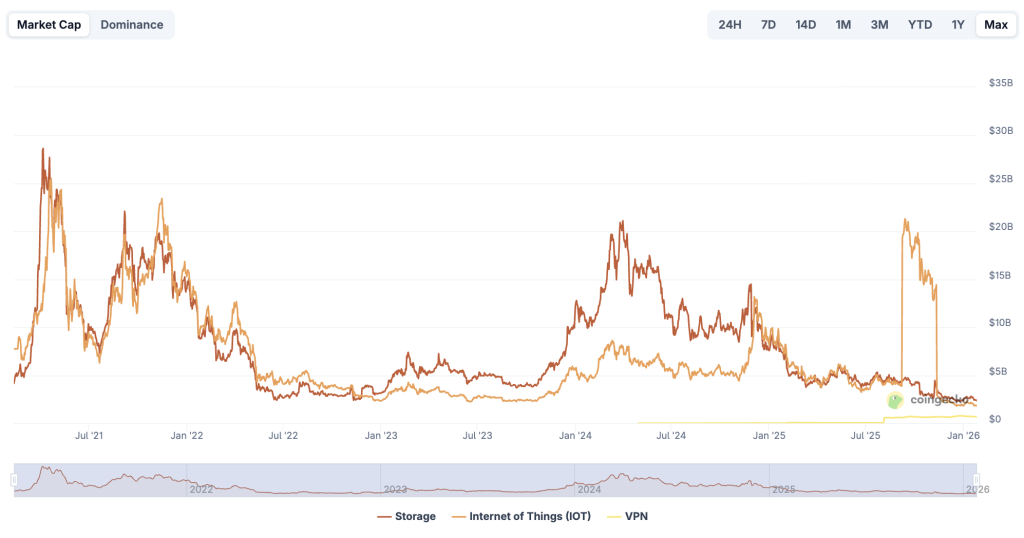
DePIN has experienced significant growth in recent years, with the number of IoID-registered devices increasing by nearly 450% in 2025. This growth is a testament to the increasing demand for decentralized infrastructure to support AI applications. Furthermore, DePINs generate real, verifiable revenue, with weekly protocol revenue increasing by over 258% to $443,770 by the end of 2025.
As we approach 2026, the challenge is no longer proving the concept of DePIN but rather demonstrating that these networks can scale as sustainable businesses with solid unit economics, binding contracts, and predictable quality. The DePIN market map 2026 highlights the diverse range of operational networks that solve real-world problems in various industries.
7 Theses for a Maturing Market
Given the changes in the DePIN market, here are seven theses for a maturing market. First, DePIN will become an essential AI infrastructure layer, providing a decentralized supply chain for AI applications. Second, networks with clear unit economics will win, with key performance indicators such as revenue per active node and utilization rates becoming the new standard.
Third, the company’s needs are proven through concrete contracts, such as telecom offload deals and B2B data agreements. Fourth, the regulatory environment should become less toxic for tokens with real use cases, with the SEC’s dismissal of claims against Nova Labs serving as an important precedent. Fifth, sector consolidation will begin with the emergence of vertical stacks, such as mapping networks that are directly integrated into the data pipelines of autonomous vehicles.
Sixth, a macroeconomic shift towards utility, evident in the rise of stablecoins and RWAs, fits perfectly with DePIN’s infrastructure focus. Finally, 2026 is the year DePIN lays the foundation for its long-term opportunities, with the market expected to reach $3.5 trillion by 2028.
The Unseen Forces Moving DePIN Forward
Beyond these observable trends, there are many strong undercurrents that make DePIN’s rise almost certain. AI’s relentless resource constraints make a decentralized supply chain an economic necessity. Declining trust in tech giants and monopolies, highlighted by events like the global Cloudflare outage in November, is creating an urgent need for resilient alternatives.
With the commercialization of hardware like sensors and routers, the masses can now build infrastructure faster and more cost-effectively than large companies. Stablecoins have become the perfect fuel for large-volume, global microtransactions required to instantly compensate millions of DePIN network contributors. A mature market will also increasingly focus on a cash flow story and ignore projects that cannot demonstrate real revenue.
Finally, simplified on-chain accounting that provides verifiable proof of work makes DePIN networks transparent, auditable, and ultimately more attractive for B2B adoption and insurance. These forces are fundamental economic and technological changes, signaling that the transition to a decentralized infrastructure is not a question of if, but when.
For more information on DePIN and its potential to become a crucial component of the AI ecosystem, visit https://cryptonews.com/exclusives/why-depin-is-the-next-big-thing-in-2026-2028/

