
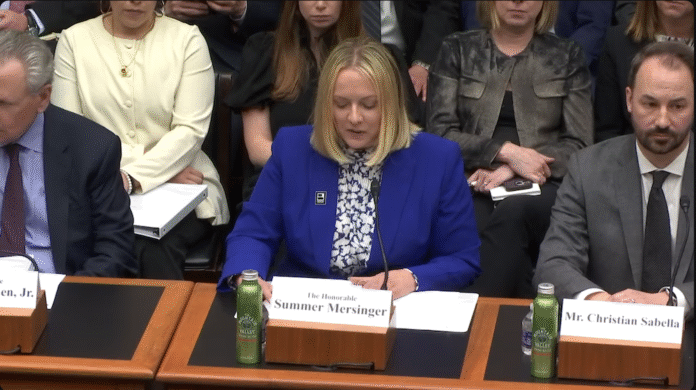
The U.S. House of Representatives Financial Services Committee convened on Wednesday to discuss the application of existing investor protection and financial oversight rules to tokenized securities. Industry executives emphasized the importance of balancing innovation with investor protection and market integrity. According to Summer Mersinger, CEO of the Blockchain Association, “tokenized real-world assets” (RWA) can reduce transaction costs and settlement times by replacing manual record-keeping processes with more transparent timestamps and stamped records on blockchain networks.
Mersinger highlighted the benefits of RWA tokenization, stating that it “reimagines U.S. financial markets” by increasing transparency and efficiency. The witnesses agreed that existing securities laws should apply to tokenized instruments, as the technology and medium used to record securities transactions do not fundamentally alter investor protection laws or judicial oversight. Proponents of RWA tokenization argue that it removes intermediaries from the settlement and clearing process, reducing transaction costs and improving the velocity of capital.

Summer Mersinger, CEO of the Blockchain Association, explains the benefits of RWA tokenization for US lawmakers. Source: GOP Financial Services Committee
Enhancing Investor Protection and Market Integrity
Lawmakers expressed concerns about anti-money laundering provisions and sanctions compliance in the context of tokenized assets. Illinois Representative Bill Foster asked about the enforcement of know-your-customer (KYC) checks and anti-money laundering regulations on private and public blockchains. Nasdaq Executive Vice President John Zecca responded that their system, which runs on a permissioned blockchain network, can collect KYC information at the protocol level.

Rep. Bill Foster questions the panel on anti-money laundering provisions and financial surveillance techniques. Source: GOP Financial Services Committee
Technological Solutions for Regulatory Compliance
Christian Sabella, managing director of the Depository Trust and Clearing Corporation (DTCC), suggested that identifying information can be embedded at the token level, enabling immutable and persistent identification regardless of the network used. Salman Banaei, general counsel of Plume Network, explained that their permissionless RWA-focused blockchain embeds anti-money laundering and sanctions compliance controls at the token level, allowing for token freezing.

DTCC Managing Director Christian Sabella explains how RWA tokens could be monitored. Source: GOP Financial Services Committee
While technological solutions are being developed to address regulatory concerns, state regulators still face challenges in identifying wash trades and market participants with certainty. As the U.S. lawmakers consider the Capital Markets Technology Modernization Act of 2026, they must balance innovation with investor protection and market integrity. For more information on this topic, visit Cointelegraph.

