
Australia Introduces Bill to Regulate Crypto Under Existing Finance Laws
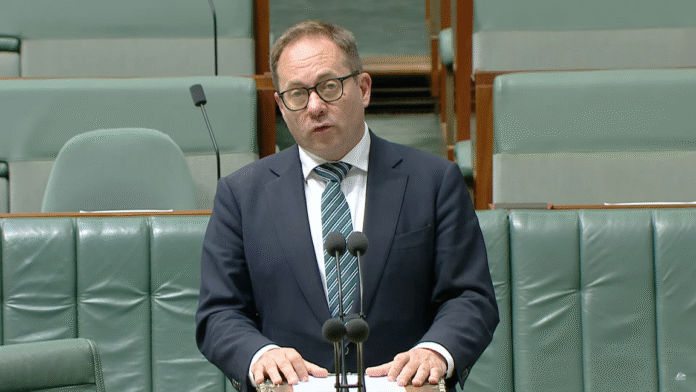
The Australian government has taken a significant step towards regulating the cryptocurrency industry by introducing a new bill that will bring crypto platforms under the existing financial services laws. Deputy Treasurer Daniel Mulino introduced the Corporations Amendment (Digital Assets Framework) Bill 2025, which aims to require crypto companies, such as exchanges and custodian banks, to obtain an Australian Financial Services License (AFSL).
According to Mulino, the bill is designed to “keep pace” with the rapidly evolving digital assets landscape, which is transforming the finance sector globally. “If we get this right, we can attract investment, create jobs and position our financial system as a leader in innovation,” he stated. 
Industry Consultation and Support
The Ministry of Finance launched a consultation in September on a draft law, which was described by Mulino as “the cornerstone” of the Albanian government’s crypto roadmap published in March. The local crypto industry was largely supportive of the bill, but many participants in the consultation called for further clarity and simplification.
Mulino acknowledged the risks associated with the current lack of regulation, stating that it is possible for a company to hold an unlimited amount of customer cryptocurrencies “without any financial protections.” He emphasized that the risks of scams or scandals like FTX “cannot be ignored.” The new bill aims to address these challenges by reducing loopholes and ensuring that comparable activities are subject to comparable obligations tailored to the digital asset ecosystem.
Key Provisions of the Bill
The legislation focuses on companies that hold crypto for customers, rather than the underlying technology itself, allowing it to evolve as new forms of tokenization and digital services emerge. The bill creates two new financial products: a “Digital Asset Platform” and a “Tokenized Custody Platform,” both of which require an AFSL. With the license, platforms are registered with the Australian Securities and Investments Commission (ASIC).
The bill also requires crypto and custodial platforms to meet ASIC’s minimum standards for transactions, settlement, and storage of customer assets. Additionally, they must provide customers with a guide explaining their services, fees, and risks. Small businesses are exempt from licensing, and the bill provides an 18-month grace period for licensing, which Mulino said “provides relief for companies trying to do the right thing.”
Next Steps and Implications
The bill is likely to pass quickly in the House of Representatives, where Prime Minister Anthony Albanese’s center-left Labor Party has a 94-seat majority. It will then proceed to the Senate, where Labor may need support from caucus members and the opposition to pass it. The introduction of this bill marks a significant step towards regulating the cryptocurrency industry in Australia, and its implications will be closely watched by industry stakeholders and regulators worldwide.
For more information on this development, please visit the source link: https://cointelegraph.com/news/australia-introduces-bill-regulate-crypto-existing-finance-laws?utm_source=rss_feed&utm_medium=rss_tag_regulation&utm_campaign=rss_partner_inbound

