
US Department of Justice Drops OpenSea NFT Fraud Case After Appeals Court Reversal
The US Department of Justice (DOJ) has officially dropped its case against former OpenSea executive Nathaniel Chastain, following an appeals court decision that overturned his conviction. Chastain was initially charged with wire fraud and money laundering for using confidential information to purchase NFTs before they were featured on OpenSea’s homepage.
According to sources, the DOJ announced that it would enter into an agreement for a one-month stay of prosecution before dismissing the charges. This decision brings an end to a chapter that began in June 2022, when Chastain was arrested and charged with exploiting his role to purchase dozens of NFTs between June and September 2021.
The case drew significant attention as it marked the first NFT insider trading prosecution in American history, with prosecutors seeking to apply traditional financial crime laws to emerging digital asset markets. However, the appeals court ruled that the jury had received incorrect instructions, allowing conviction based on unethical conduct rather than actual theft of property of commercial value.
The Appeals Court Ruling and Its Implications
The 2nd U.S. Circuit Court of Appeals ruled 2-1 that jurors were improperly told they could convict Chastain solely on unethical conduct rather than actual theft of property of commercial value. Judge Steven Menashi wrote that the lower court erred by allowing a conviction even if the information Chastain used had no tangible value to OpenSea. The appeals body sharply criticized jury instructions that allowed conviction based on violations of “general principles of honesty and fair play,” warning that such standards could criminalize almost any fraudulent act.
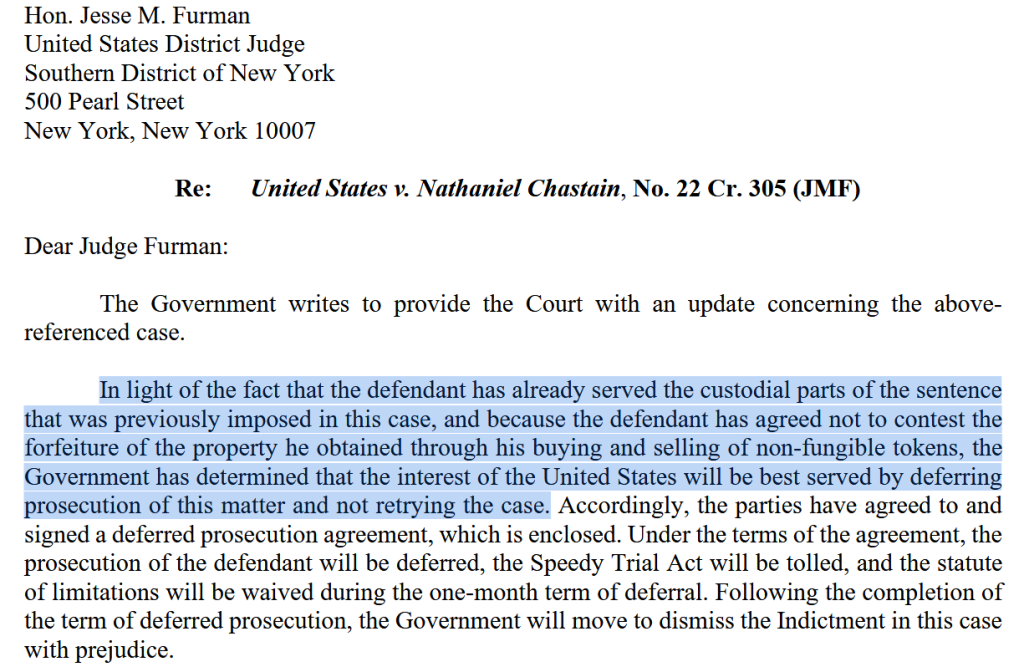
Manhattan U.S. Attorney Jay Clayton stated that prosecutors would not retry the case, as Chastain had already served three months in prison and agreed not to contest the forfeiture of 15.98 ETH worth $47,330. Clayton wrote in the court filing, “The interest of the United States will be best served by deferring prosecution of this matter and not retrieving the case.”
Original Conviction and Novel Legal Theory
Chastain was convicted in May 2023 after prosecutors accused him of exploiting his role to purchase dozens of NFTs between June and September 2021, shortly before they appeared on OpenSea’s homepage. The government claimed he earned over $57,000 through the program. When announcing the indictment, US Attorney Damian Williams described the case as a warning to the digital asset markets, stating, “NFTs may be new, but this type of criminal scheme is not.”
The conviction came after a week-long trial in which prosecutors alleged wire fraud, not securities fraud, since NFTs are not legally classified as securities. More than 300 defense attorneys had submitted letters supporting the dismissal, arguing that treating confidential business information as property would “criminalize a wide range of behavior.”
Broader Regulatory Retreat Under the Trump Administration
The dropped prosecution is consistent with a broader shift in federal crypto enforcement under the Trump administration. As reported by Cryptonews, a report from Cornerstone Research found that the SEC took only 13 crypto-related actions in 2025, a 60% decrease from 33 in 2024 and the lowest level since 2017. The agency has dismissed several high-profile cases, including those against Coinbase, Kraken, Consensys, and Cumberland DRW.
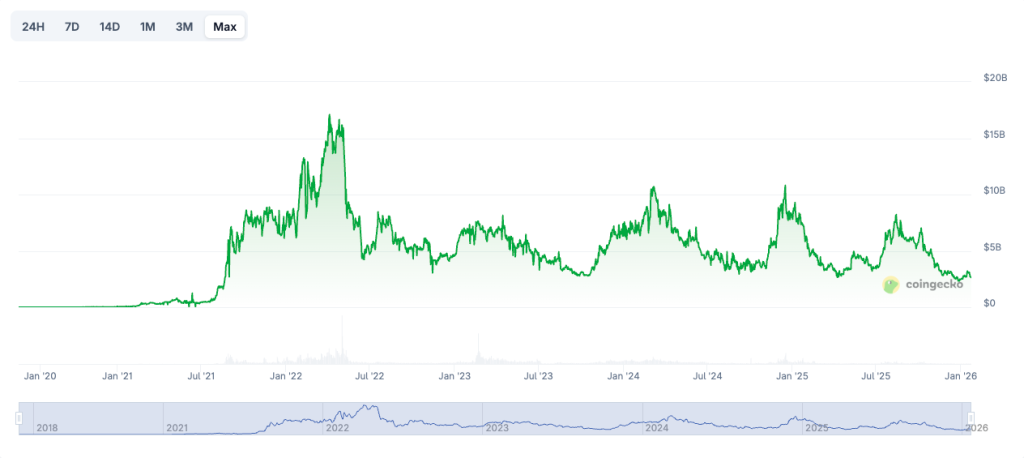
According to CoinGecko data, the global NFT market cap currently stands at $2.56 billion, down 6.72% in the last 24 hours, with the total sales volume reaching $3.68 million. This figure represents an 84.78% decline from the market peak of $16.82 billion in April 2022, when digital collectibles were among the hottest assets in crypto and the Chastain case first came to light.
Read more about the case and its implications on the crypto market at https://cryptonews.com/news/doj-drops-opensea-nft-fraud-case-after-appeals-court-overturns-conviction/

