
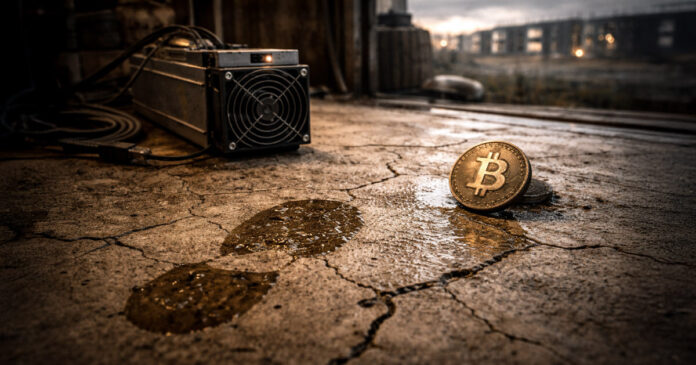
Introduction to Solo Bitcoin Mining
A single Bitcoin (BTC) miner received a full block reward on January 13, claiming 3,125 BTC plus fees, worth nearly $300,000 at current prices. This significant payout highlights the ongoing presence of solo miners in the Bitcoin network, despite the dominance of industrial-scale mining operations. The odds of such a win are extremely low, but the probability of success does not deter solo miners, who continue to find blocks and claim substantial rewards.
Understanding Solo Mining Odds
The math behind solo mining is brutal, with the Bitcoin network’s hashrate reaching approximately 1,024 exahashes per second in mid-January 2026. A hobby miner running an ASIC at 6 TH/s has about a 1 in 170 million chance per block attempt, resulting in an expected wait time of over 3,000 years to find a single block. However, solo victories continue to happen, with verified solo blocks added to the chain every few weeks.
Mining involves a Poisson process, a statistical model of random events over time, which is a memoryless lottery where each trial is independent. Hashrate determines the probability per block, but the probability does not enforce an even distribution over short periods of time. A miner running a miner at 6 TH/s for a month has a 0.0025% chance of finding at least one block, which is almost zero but not zero.
Solo Mining Services and Infrastructure
Most solo profits come through solo mining services like Solo CKPool, which enables stratum work coordination, allowing individual miners to compete for the rewards for the entire block without running the entire stack itself. CKPool explicitly defines its service as “not a pool” in the economic sense, as there is no sharing of rewards among participants. Each miner’s hashrate competes independently for the full block reward.
A newer model is its own solo pool software, exemplified by Public Pool in the Umbrel ecosystem. This open-source application allows miners to run a solo mining pool with their own node and keep the full reward when they hit a block. It eliminates the service fee but requires more technical setup. What all models have in common is that for a successful find, the miner receives the entire block reward rather than a proportional share based on the hashrate contributed over time.
Recent Solo Victories and Trends
Solo block discoveries have maintained a consistent cadence over the past year, with 22 verified solo blocks mined in the last 12 months, representing a 29% increase year-over-year. The average gap between solo wins across all tracked setups is 15.6 days, with the longest drought lasting 54 days. The total rewards distributed to solo miners during this period are approximately 69.35 BTC.
Bennet’s Solo mining tracker, which aggregates verified solo blocks across CKPool, Public Pool, FutureBit devices, and other well-known solo setups, shows that solo miners found 22 blocks in the last 12 months with an average interval of 15.6 days, for a total reward of 69.35 BTC. These numbers demonstrate that solo mining continues to perform exactly as probability predicts: mostly silent, occasionally spectacular.
Why Solo Mining Persists
The economic case for solo mining is weak when optimized for stable income, as pool mining pays out proportionally to the hash rate contributed, smoothing out variances into predictable payouts. However, solo mining persists because a subset of miners estimate the variance themselves, pursuing mining hardware as a hobby or out of ideological commitment rather than as a profit-maximizing business.
Infrastructure improvements have also reduced technical hurdles, making it easier for miners to try solo mining. The easier it becomes to mine alone, the more miners will try it, and the more visible the solo profits will be. As the network continues to grow, solo miners will eventually strike, confirming that solo mining continues to perform exactly as probability predicts.
Conclusion
The January 13th block represents the latest data point in a well-established pattern, with a single address receiving the full block reward worth almost $300,000. The payout structure suggests that the profit came from the solo mining infrastructure, highlighting the ongoing presence of solo miners in the Bitcoin network. For more information on solo Bitcoin mining, visit https://cryptoslate.com/how-solo-bitcoin-miners-hit-22-blocks-hit-in-12-months-as-the-global-energy-lottery-gets-hyped-up/

