
Making strides in the realm of cryptocurrency adoption, Michigan has advanced its strategic crypto reserve accounting to a second reading. This move comes as part of the Michigan House Bill 4087, which aims to enable the state to invest in crypto assets under specific conditions. The bill was referred to the committee for government transactions, marking a significant step forward in the legislation process.
Background and Provisions of the Bill
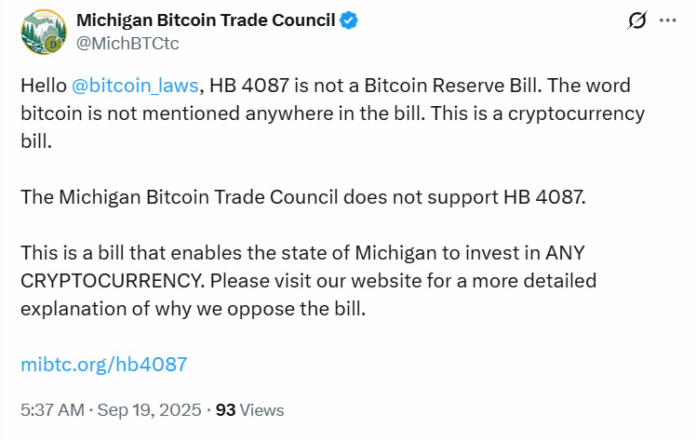
The Michigan House Bill 4087 seeks to amend the state’s management and budget law to establish guidelines for a strategic crypto reserve. Although the bill does not specifically mention Bitcoin (BTC), it outlines provisions for investing up to 10% of the funds from Michigan’s “Concyclical Budget” and “Economic Stabilization Fund” in cryptocurrency. The state treasurer would be authorized to make these investments, provided they are made through approved methods such as a “safe custody solution,” a qualified administrator like a bank or trust company, or an investment product from registered investment companies.
The legislation also details technical security requirements for custody solutions, including state control of private keys, end-to-end encryption, and regular security audits. Furthermore, the state can borrow cryptocurrency to achieve additional returns, as long as the financial risk does not increase. The crypto reserve calculation is not limited to Bitcoin, but the legislation does specify that digital assets used for the strategic reserves must utilize encryption techniques to regulate currency units and check the transfer of funds, operating independently of a central bank.
Opposition and Concerns
The Michigan Bitcoin Trade Council has expressed opposition to the legislation, citing concerns over the lack of a market capitalization threshold that would prevent the state from buying cryptocurrencies other than Bitcoin. The council argues that including other crypto assets in the strategic reserve poses unnecessary risk, as these assets are often centralized and exposed to significant risk. In contrast, Bitcoin is decentralized and has a larger market capitalization, making it a more stable investment option.

It’s worth noting that only a few states have passed laws enabling state-related entities to invest in Bitcoin and crypto assets. These states include New Hampshire, Arizona, and Texas. In other states, such as Montana, North Dakota, South Dakota, Wyoming, and Pennsylvania, strategic Bitcoin reserve laws have been rejected. According to the Bitcoin Reserve Monitor, there are 17 other countries with pending legislation related to crypto reserves.

Conclusion and Future Outlook
As Michigan moves forward with its crypto reserve bill, it joins other states like Massachusetts and Ohio in exploring the potential of cryptocurrency investments. While there are concerns and opposition, the advancement of this legislation marks a significant step in the adoption of cryptocurrency at the state level. For more information on this developing story, visit https://cointelegraph.com/news/michigan-crypto-reserve-bill-moves-to-second-reading?utm_source=rss_feed&utm_medium=rss_tag_regulation&utm_campaign=rss_partner_inbound

