
Bitcoin’s Price Stagnation: On-Chain Activity and Exchange Liquidity Metrics
As Bitcoin (BTC) continues to hover near $87,000, on-chain activity and exchange liquidity metrics suggest the market is in a period of low participation, limiting its rise above $90,000. The current market conditions are characterized by a decline in network activity, reduced selling pressure, and tighter liquidity. In this article, we will explore the key takeaways and insights from the current market trends.
Key Takeaways:
-
Bitcoin traded around $88,000 as network activity fell to yearly lows while selling pressure eased.
-
Currency inflows on Binance and Coinbase have dropped sharply, indicating tighter liquidity.
The Activity of the Bitcoin Network is Decreasing as the Price Remains Stable
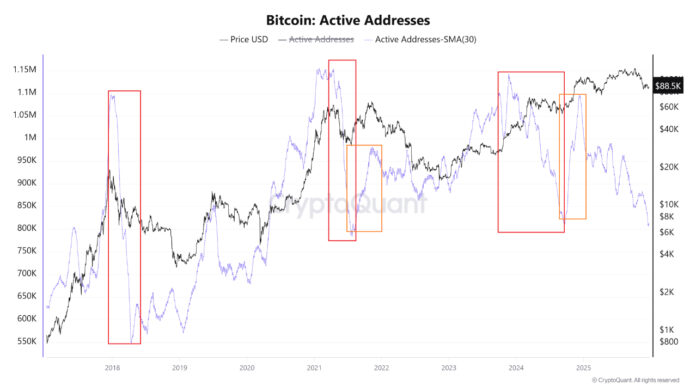
Data from CryptoQuant suggests a slowdown in Bitcoin’s network utility. The 30-day moving average of active addresses has fallen to around 807,000, its lowest level in the past year, indicating lower participation from both retail users and short-term traders.

Active Bitcoin addresses are declining. Source: CryptoQuant
The behavior of the exchange flow reinforces this signal. The number of deposit and withdrawal addresses on Binance has simultaneously declined, with both metrics at yearly lows. This slowdown reflects market stagnation.
The low deposit activity suggests that long-term holders are not rushing to sell, keeping sell-side pressure limited. At the same time, muted withdrawals suggest that aggressive accumulation has paused as investors exercise caution for now.
Liquidity is Becoming Tighter as Foreign Exchange Inflows Decline
Meanwhile, foreign exchange inflow data highlighted how liquidity conditions have changed amid stable prices.
On November 24, when Bitcoin was trading at around $88,500, seven-day cumulative inflows reached $21 billion on Coinbase and $15.3 billion on Binance, reflecting active repositioning.

Bitcoin and Ether exchange inflows on Coinbase, Binance. Source: CryptoQuant
As of December 21, BTC was still at $88,500, but Coinbase inflows fell by almost 63% to $7.8 billion, while Binance saw a more modest decline to $10.3 billion. This shift signals a broad decline in new liquidity and suggests reduced short-term trading activity and tighter market conditions overall.
These BTC Values Could Determine the Next Move
From a technical perspective, Bitcoin remains in the $85,000-$90,000 range and repeatedly fails to sustain a breakout above resistance. BTC price is currently below the monthly volume weighted average price indicator (VWAP), reinforcing a neutral to cautious bias.

Bitcoin four hour chart. Source: Cointelegraph/TradingView
Liquidity clusters on Binance suggest two key magnet zones. On the other hand, a buy-side fair value gap (FVG) between $85,800 and $86,500 contains a dense cluster of leveraged long exposures.
A move into this area would put over $60 million worth of long positions at liquidation risk, making them a possible downside liquidity target.
Conversely, FVG remains vacant on the sell side between $90,600 and $92,000 and has about $70 million in short liquidation risk. Since liquidity above and below price is clearly defined, Bitcoin’s near-term direction will likely depend on which side of the range is tapped first.

Bitcoin liquidation heatmap. Source: CoinGlass
This article does not contain any investment advice or recommendations. Every investment and trading activity involves risks and readers should conduct their own research when making their decision. While we strive to provide accurate and up-to-date information, Cointelegraph does not guarantee the accuracy, completeness or reliability of the information in this article. This article may contain forward-looking statements that are subject to risks and uncertainties. Cointelegraph will not be liable for any loss or damage arising from your reliance on this information.
For more information, visit https://cointelegraph.com/news/bitcoin-stuck-below-90k-until-these-market-conditions-improve

