
Introduction to Bitcoin’s Price Patterns
The price of Bitcoin has historically followed a predictable pattern, with a programmed event known as the halving reducing the supply of Bitcoin and creating scarcity. This scarcity has often been followed by periods of strong price increases and later corrections, resulting in a repeating sequence commonly referred to as the four-year cycle. However, a recent analysis by Grayscale suggests that Bitcoin’s price movements may be moving beyond this traditional model, with factors such as institutional demand and general economic conditions increasingly influencing the market.
The Traditional Four-Year Cycle
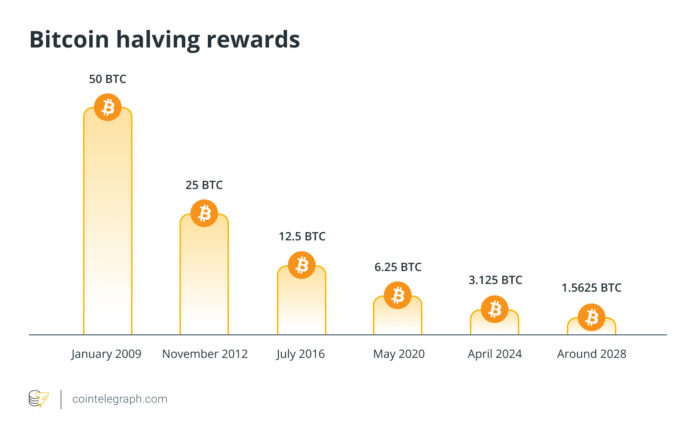
Bitcoin halvings, which occur approximately every four years, reduce the issuance of new BTC by 50%. Historically, these supply reductions have preceded large bull markets, with notable examples including the 2012 halving followed by a peak in 2013, the 2016 halving followed by a peak in 2017, and the 2020 halving followed by a peak in 2021. The pattern arose from both the built-in scarcity mechanism and investor psychology, with retail demand driving the market. However, with more of the fixed Bitcoin supply of 21 million already in circulation, each halving has an increasingly smaller relative impact, raising questions about whether supply shocks alone can continue to dominate the cycle.
Grayscale’s Assessment of Bitcoin Cycles
Grayscale has concluded that the current market differs significantly from previous cycles in three key ways. Firstly, institutional demand is now driving the market, rather than retail speculation. Secondly, the recent price rise has been more controlled, with a subsequent 30% decline appearing more like a normal bull market correction than the start of a multi-year bear market. Finally, the macro environment is playing a more important role, with factors such as interest rate expectations, bipartisan dynamics of US crypto regulation, and the integration of Bitcoin into institutional portfolios increasingly shaping market behavior.
Institutional Demand and the Macro Environment
Grayscale notes that institutional vehicles attract patient, long-term capital, contrasting with the fast-paced, emotion-filled retail trading of 2013 and 2017. The company also highlights the importance of the macro environment, citing expected changes in interest rates, growing bipartisan support for US crypto legislation, and the inclusion of Bitcoin in diversified institutional portfolios as key influences on the market.
Glassnode Data and the Evolution of Bitcoin Cycles
Glassnode’s on-chain research shows that Bitcoin’s price has deviated from historical norms on several occasions. The supply of long-term holders is at a historically high level, with long-term holders controlling a greater share of circulating supply than ever before. This continuous accumulation limits the amount of Bitcoin available for trading and reduces the supply shock effect that typically accompanies halvings. Additionally, realized volatility has remained well below levels of previous cycle turning points, indicating that the market is handling large moves more efficiently, often due to greater institutional participation.
A More Flexible, Macro-Linked Bitcoin Cycle
According to Grayscale, Bitcoin price behavior is gradually moving away from the four-year model and becoming more responsive to stable, long-term institutional capital, improving regulatory environments, global macroeconomic liquidity, continued ETF demand, and a growing group of committed long-term owners. While corrections remain inevitable and can still be serious, they do not automatically signal the start of a sustained bear market.
Why Some Analysts Still Believe in Halving Patterns
Certain analysts continue to believe that halvings remain the main driver of Bitcoin’s price movements, citing the halving as a fundamental and irreversible supply cut, and noting that long-term holder activity continues to be concentrated around halving periods. However, Grayscale’s argument against the dominance of the traditional four-year cycle rests on clear structural changes, including increasing institutional participation, greater integration into global macro conditions, and lasting changes in supply dynamics.
An Evolving Framework for Understanding Bitcoin
As a result, analysts are placing less emphasis on fixed halving-based timing models, instead focusing on on-chain metrics, liquidity trends, and institutional flow indicators. This refined approach better captures Bitcoin’s ongoing transformation from a marginal digital asset to a recognized part of the global financial landscape. For more information on Bitcoin and its price patterns, visit Cointelegraph.


