
Tajikistan’s Crypto Mining Crackdown: A Response to Energy Strains
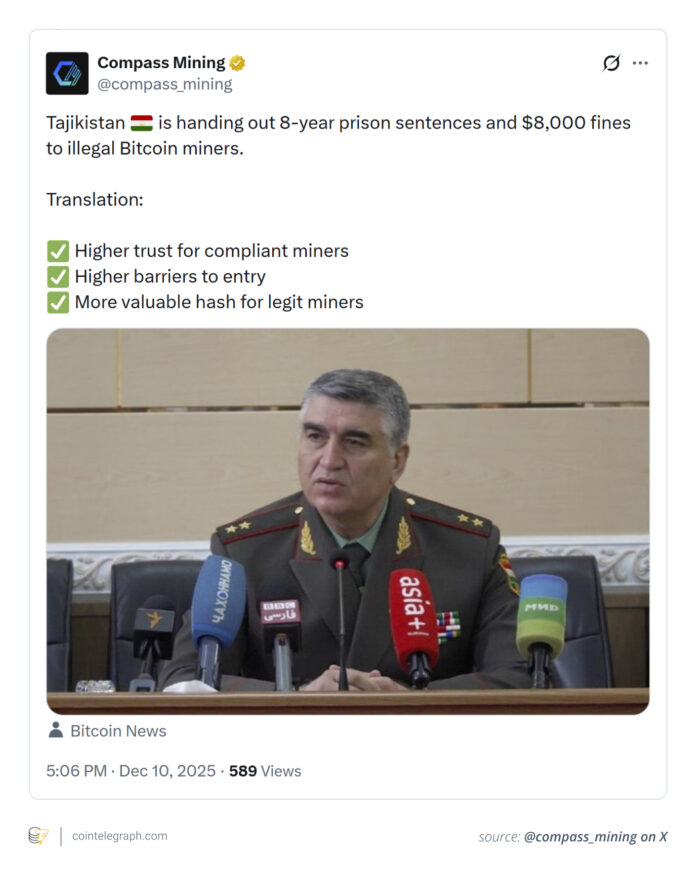
Tajikistan has taken a significant step in regulating cryptocurrency mining by criminalizing the use of stolen electricity for this purpose. The move aims to mitigate the country’s energy crisis, which has been exacerbated by widespread electricity shortages and alleged illegal mining activities. As a result, the government has introduced severe penalties, including fines of up to $8,250 and prison sentences of up to eight years, for those caught mining digital assets using stolen or unmetered electricity.
The new law, approved by Tajikistan’s parliament on December 3, 2025, marks a significant shift in the country’s approach to cryptocurrency mining. The legislation introduces Article 253 paragraph 2, entitled “Illegal use of electricity to produce virtual assets,” which carries substantial penalties for offenders. The basic offense is punishable by fines ranging from $1,650 to $4,070, while more severe cases can result in prison sentences of up to eight years.

According to Attorney General Habibullo Vohidzoda, the unregulated mining activities have led to regional power outages, millions of dollars in losses, and a rise in related crimes. The damage from illegal mining has reached approximately $3.52 million, with several criminal cases being investigated. The decision to crackdown on illegal mining is a response to the country’s energy crisis, which has been worsened by the illegal connection of mining farms to the national grid.
Energy Crisis in Tajikistan
Tajikistan’s energy crisis is characterized by widespread electricity shortages, particularly during the winter months. The country relies heavily on hydropower, and low water levels in reservoirs have forced authorities to ration electricity. In many areas, residents receive electricity for only two to four hours a day. Unlicensed mining farms have exacerbated the situation, often illegally connecting to the national grid or bypassing meters to avoid paying for electricity.
MP Shukhrat Ganizoda highlighted the significant strain that large mining farms put on the network, with a typical application-specific integrated circuit (ASIC) mining device using about 3.5 kilowatts (kW) of power. More advanced models can use up to 6 kW, and perpetrators often manipulate pipes and meters to reduce costs and maximize profits. The illegal mining activities also contribute to tax evasion, untraceable financial transactions, and attempts to hide or launder criminal proceeds.
Global Crypto Mining Crackdown
Tajikistan’s move is part of a broader international trend, as governments worldwide rethink their stance on cryptocurrency mining due to rising energy costs and grid overload. In Malaysia, authorities have uncovered thousands of illegal mining sites, resulting in over $1 billion worth of stolen electricity. In Kuwait, a nationwide effort was launched to close unauthorized mining farms in 2025, following power shortages.
Even in countries like China and Kazakhstan, which once pursued mining, energy shortages and environmental concerns have led to stricter regulations and bans. Many governments now view illicit mining as theft or economic sabotage rather than a simple administrative violation. The common thread is clear: where electricity is cheap, subsidized, or poorly monitored, crypto mining tends to increase, and when energy becomes scarce, regulators step in to protect the grid and ensure public access to vital energy.
Implications for Crypto Policy and Energy Security
Tajikistan’s crackdown on mining highlights the evolving nature of cryptocurrency mining, from a financial curiosity to a matter of national infrastructure and energy policy. Mining Bitcoin (BTC) and other proof-of-work cryptocurrencies consumes large amounts of electricity, and when done illegally, results in a double burden: consuming limited energy resources and depriving the state of revenue.
The new law signals to investors and businesses that the government is serious about regulating digital asset activities. The move comes at a time when the country is increasing penalties for other forms of electricity theft and non-payment, punishable by fines of up to $9,900 or prison sentences of up to eight years. The hope is that the new penalties will discourage illegal mining altogether, rather than driving it further underground.
Future of Crypto Mining and Energy Security
The tightening of rules in Tajikistan and elsewhere is likely to accelerate “mining migration,” as miners move to jurisdictions with more lenient rules or cheaper energy. This pattern has played out before, with China’s ban on crypto mining in 2021 leading to a shift in the industry to countries like Kazakhstan, the United States, and Russia.
Experts say the future of mining will increasingly depend on access to renewable or surplus energy. Operations that rely on sustainable energy are less likely to face regulatory scrutiny. Some blockchain networks are also moving towards proof-of-stake models, which typically require far less power. For Tajikistan, the goal is to balance innovation and responsibility, ensuring that mining activities do not compromise the country’s energy security.
Read more about the intersection of cryptocurrency and energy policy at Cointelegraph.

